A Complete Voice and Speech Program for Actors
About Shane Ann
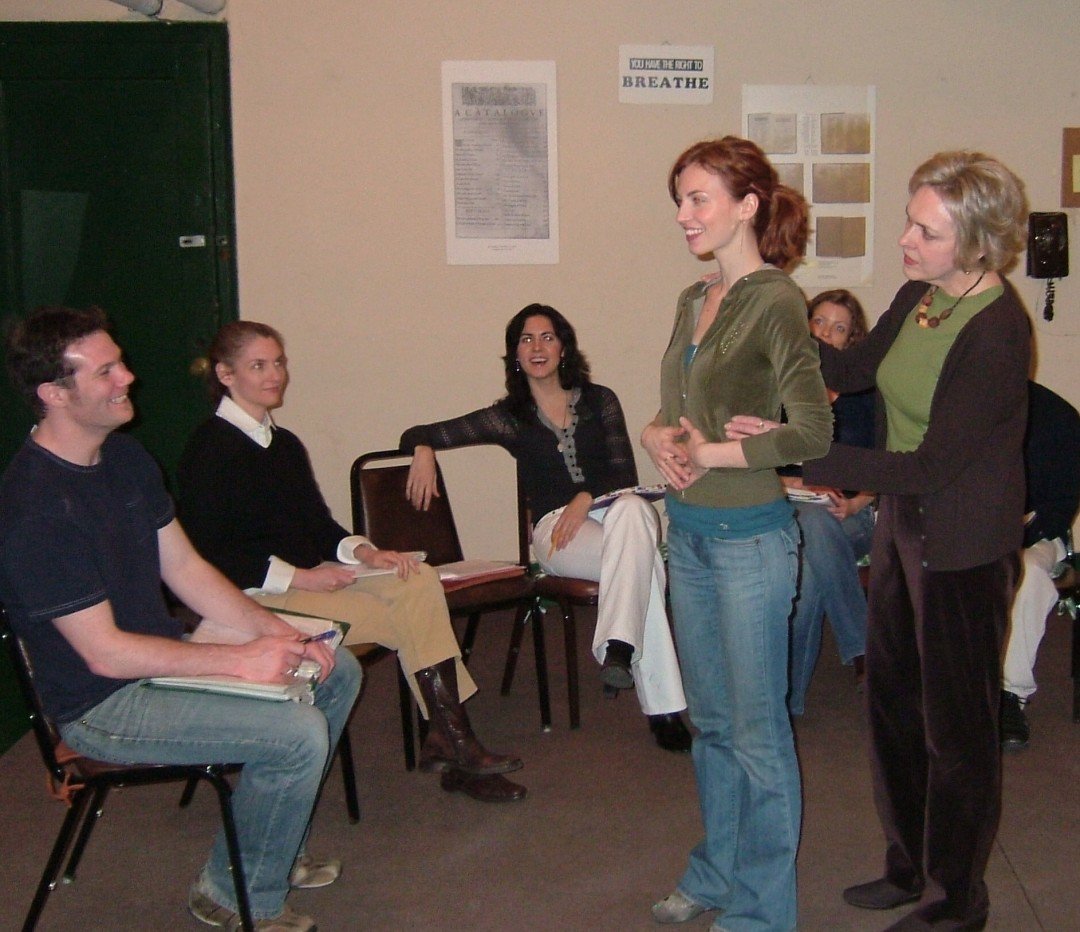
Shane Ann Younts teaches a complete voice, and speech program in Manhattan, where she also does private coaching for theater, film and television.
In addition she is a Master Teacher (Associate Arts Professor) in the Graduate Acting Program at New York University’s Tisch School of the Arts, where she teaches voice and text classes.
She has served as Voice Consultant/Dialect Coach On-Broadway for productions including:
“Newsies”, “Bonnie & Clyde”, “Mary Poppins”, “Mamma Mia!”, “Spamalot”, “Tarzan”, and the Lincoln Center 3 production of “Stunning” and Off-Broadway productions at The Public Theater including: The Shakespeare in the Park productions of “All’s Well”, “Measure for Measure”, “Hamlet” – starring Michael Stuhlbarg and “Macbeth” – starring Liev Schreiber) and “Timon of Athens” for the Public Lab, The Red Bull Theater, Second Stage Theatre, the Drama Department, TheVineyard Theatre, and The Pearl Theatre.

Backstage with former students: Mia Barron, Jason Butler Harner & Billy Crudup. Cast of the Lincoln Center Broadway production of “The Coast of Utopia”.
She has also served as Voice Consultant at regional theaters:
- Paper Mill Playhouse (“The Miracle Worker”, “Steel Magnolias” and “1776″)
- The Guthrie Theater (“A Midsummer Night’s Dream” and “Twelfth Night” – both directed by Joe Dowling, and “Antony and Cleopatra” – directed by Mark Lamos)
- The Shakespeare Theatre (“Cyrano” – directed by Michael Kahn)
- Ford’s Theatre (“The Matchmaker” – directed by Mark Lamos)
- The Acting Company (“The Heart is a Lonely Hunter ” – directed by Doug Hughes)
She has taught at:
- The Public Theater’s Summer Shakespeare Lab
- The Guthrie Experience
- The Sedona Shakespeare Institute
- The Juilliard School (Drama Division),
- The American Academy of Dramatic Arts
- NYU’s Undergraduate Drama in The Classical Studio
Shane Ann received her voice and speech training from Robert Neff Williams including the Advanced work which used the texts of Shakespeare. Additional voice training includes workshops with Cicely Berry, Andrew Wade, and Richard Armstrong. She has studied the Michael Chekhov Technique with Joanna Merlin and Lenard Petit and the Alexander Technique with Kim Jessor and Mona Stiles.
She is co-author (with Louis Scheeder) of “All the Words on Stage, A Complete Pronunciation Dictionary for the Plays of William Shakespeare”.
Shane Ann is included in Marquis’ Who’s Who in America.
Shane Ann has been teaching in New York City for over twenty-five years.
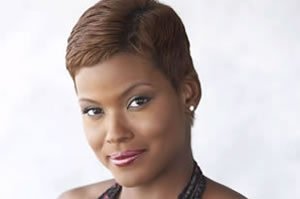
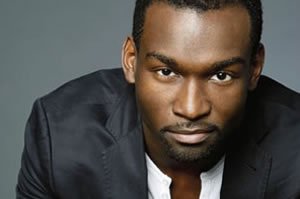
Her former students are currently appearing on Broadway, Off-Broadway, in regional theaters, film and television. Some of her former students include: Deana Barone, Josh Barrett, Elisa Bocanegra, Billy Crudup, Tate Donovan, Cassandra Freeman, Wood Harris, Creighton James, Maggie Lacey, Dylan McDermott, Debra Messing, Danny Pino, Jeremy Shamos, Daniel Sunjata, Connie Nielsen and Jeff Whitty.
“Shane Ann’s presence in an actor’s training is a gift to open every time that actor sets foot on the professional stage. Clarity and vocal presence through thought, breath, and action in large houses with minimal sound enhancement is one of the greater challenges to an actor. This was never more apparent to me than during my run in the Tony Award winning production of “Sideman” on Broadway and in London’s West End.” Jeff Binder
Shane Ann’s Photo by BluFace Photography
Site Design by Virtual Webster
About the Program
The Purpose of This Program is to:
- Develop the actor’s voice so that it is sensitive to and has the ability to meet the demands of language – all types of language from voice-over copy to
classical texts. A monotone speech pattern or a voice that is nasal, tight, or unsupported does not allow the actor the flexibility to express the full range of what he or she is feeling
- To uncover the clear, resonant, and versatile voice, which everyone has, is one of the primary aims of the program
- Classes are structured so that each technical tool leads to the next step. All of the speech work is connected to the voice work and all of the exercises are applied to texts – poetry and prose.
The Program Includes:
- Speech (diction) exercises to learn the correct placement of all of the consonants and vowels in Standard American Speech, to eliminate regionalisms, and
to give a clarity to the actor’s speech without sounding phony
- Voice work to develop a centered, supported voice by working on relaxation, breathing, resonance, stress, volume, and melody
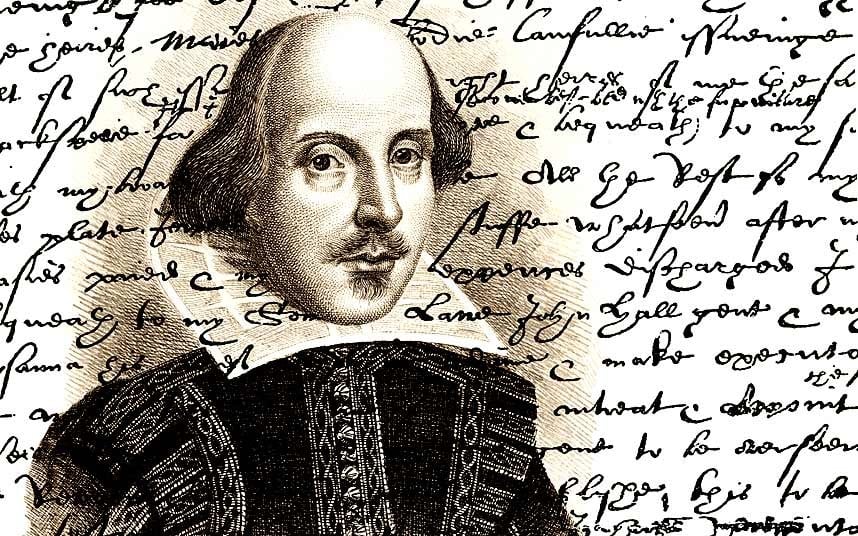
- A variety of exercises applying the speech and voice work to prose passages and poetry. The poetry work begins with contemporary poems and ends with Restoration and Elizabethan poems and the sonnets of William Shakespeare.
When do classes meet?
The classes begin in October and continue through June. Classes are held on Mondays and Thursdays from 4:00 – 5:30pm. After a summer break, the program continues in the third week of September with the Advanced work and ends in February. The Advanced Class meets from 5:30p.m. – 8:00p.m.
Advanced Class
In the Advanced Class, work continues on voice, and speech and also includes work on the texts of Shakespeare including the technical aspects of speaking the verse:
- scanning
- building a speech
- expressing contrasting ideas
- finding spines
- and much more…
All of the technical work is connected to acting the texts.
Voice and Monologue Master Workshop
A Master Workshop will be available to students who have completed the program above, starting in March. The Workshop meets on Mondays from 5:30 – 8:30pm.
Where do classes meet?
All classes and the workshop are taught at the Pearl Studios, 500 8th Avenue between 35th and 36th Street, New York, NY.
*Private Coaching is also available
- a one on one session to work on an audition scene or monologue or for dialect coaching

“Shane Ann is deeply invested in the growth of each one of her students which allows her to be tough when she needs to be but she is also one of the most encouraging and supportive people I have ever met.”
Shane Mcrae
“I am happy to have Shane Ann’s expertise in my memory and to have the privilege of counting her good taste, good notes and good spirit among my influences. I have employed her teachings for everything from voice-over work to Max Frisch to television sitcoms.” Maggie Lacey
Shane Ann’s Photo by Blu Face Photography
Site Design by Virtual Webster
What Students Say
A few years ago, the students in my Studio Class gave me a book they made. It was filled with these comments.
It is, without question, one of the most wonderful gifts I have ever received.
“Should a student have the good fortune to be taught by someone the caliber of Shane Ann, even once in their life, they ought to count themselves among the lucky few. She is in that very special class of teachers that makes something magical of their subject. Her passion and remarkable understanding of the material, the highly focused and individualized attention she pays to each student and her gift of making the most complex language of Shakespeare seem totally accessible is unparalleled. The program she has constructed is the most thorough and dynamic you will find, completely distinct in its source material and its approach to finding your voice and commanding the text. Shane Ann has taught me to always arrive prepared, to go the extra mile to find out the answers to the questions I don’t know, and to trust in the power of my own voice. If more actors studied with Shane Ann, the American theater would be a far more interesting place.”
Jenna Weinberg
“Shane Ann touched my life in such a profound way, emotionally, mentally and spiritually. It is hard to put into words how amazing I feel when I think about our class and working with her. She helped me walk through walls that I never knew existed. I know that my voice and speech were always a source of insecurity. I thought I could get away with it or maybe people wouldn’t notice. The depth of knowledge she bestowed on my class is sublime. I get chills just thinking about it. A large part of my ability to create comes from the great mentors who have left an indelible imprint on my soul. I thank Shane Ann for being one of those mentors.”
Adam Feingold
“It’s hard for me to think of the right words to express how much Shane Ann has given me. Obviously, the biggest gift is a voice of range, strength and spirit – a voice that I am proud of and want to share with the world. She has instilled a confidence in me that I will forever be grateful for. She is an amazingly kind and generous teacher. And by that I mean I always felt like she was right there beside me – guiding me ever step of the way. Thank you for everything you have given me. I will cherish it!”
Kimberly Klein
“Shane Ann is my personal decoder ring that I luckily found in the pages of Backstage newspaper. She helped me break the code for my voice, for Shakespeare and my life. She always took the time to explain Shakespeare. Any time I’d struggle and feel lost, she’d scoop me up and make me feel safe again.”
Betsy Hoffman
“I am so grateful to you for being so dedicated, prepared, specific, encouraging and passionate. You have given me the gift of being able to speak the language of Shakespeare (as well as contemporary texts) and the courage and confidence to do so.”
Mary Catherine Donnelly
“Not only did Shane Ann improve my diction (I no longer have a sibilant “s”), but she also strengthened my self confidence as an actor. I feel ready to enter any audition with the confidence needed to make people stop and listen. Joining Shane Ann’s class was the best professional decision I’ve made.”
Bethany Winkels
“I have learned so much and grown so much from Shane Ann’s class. I have gotten more work since I’ve lost my accent – “Night over Taos” starring Estelle Parsons, and the “Sesame Street” new program pilot. The producers said my speech was “really clean”! Shane Ann is persistent and she teaches actors to become artists.”
Vivian Chu
“I would follow Shane Ann anywhere to work with her because she is a true master teacher. When she was looking for a new Studio where she could teach her classes, I told her: “Don’t worry, I will follow you into the bathroom if that’s where the class is meeting. I would go anywhere to train with you.”
Jai Catalano

Site Design by Virtual Webster
Voice & Speech Tips
Don’t miss out on my Voice and Speech Tips. You’ll receive tips once a week. Some tips are geared to actors and some to business professionals.
” Thank you for your voice and speech tips. They cover a huge variety of topics and have been super helpful.”
Alex Mahgoub
“Dear Shane Ann, I just wanted to thank you for your inspiring automatic emails… I save and print them all! They really do get me practicing my voice more often . Thank you!”
Patti Lyons
All the Words on Stage
Shane Ann is co-author of “All the Words on Stage, A Complete Pronunciation Dictionary for the Plays of William Shakespeare”.
- “All the Words on Stage” makes the speaking of Shakespeare’s texts truly accessible to students, actors, and the general public. It is an indispensable tool for the rehearsal studio, the theater, and the classroom.
- This book makes it possible for you to pronounce every character name, geographic location, mythological reference, and any unfamiliar word in all 37 plays.
- The pronunciation of each word is given in an easy to understand respelling system as well as with phonetics. Alternate pronunciations, based on the meter in Shakespeare’s verse, are also included.
- This reference book contains a chapter that discusses techniques of verse speaking and an appendix that alerts the reader to especially difficult words in each play.
This expansive dictionary also lists the pronunciation of every Latin word and phrase in Shakespeare.
Contents page of “All the words on Stage” includes:
- Introduction
- Acknowledgments
- Play Titles and Abbreviations
- Key to Pronunciations
- How to Use the Dictionary
- Scanning the verse
- The Dictionary
- Latin
- Accents, Dialects, and Foreign Languages
- Afterthoughts
- References
Audio Dictionary Samples:
COZ (KUHZ)
DUDGEON (DUHJ-uhn)
FADGE (FAAJ)
FAIN (FAYN)
FALCHION (FAWL-chuhn)
GURNET (GER-nit)
GYVE (JEYEV)
IONIA (eye-OH-nee-ah)
MANDRAGORA (maan-DRAAG-uh-ruh)
NERVII (NER-vee-eye)
TROW (TROH)
Purchase Online:
Amazon.com
Barnes & Noble
ISBN: 1575252147
“Anyone who has dedicated numerous rehearsal hours to explore and prepare for a production of Shakespeare will be delighted that this useful tool, painstakingly put together by Louis Scheeder and Shane Ann Younts, is available. Their comprehensive pronunciation dictionary blends thorough academic expertise with the practicalities of helping actors navigate the splendidly perilous ocean of Shakespeare’s language so that the actors can satisfy Hamlet’s request to speak their speeches ‘trippingly on the tongue’.”
Joe Dowling, Artistic Director of the Guthrie Theater
“Since Shakespeare has become the most produced playwright in America, this book serves a wonderful purpose, throwing light where there has been considerable darkness. It tells you how to pronounce every single word (and their variants) in the Shakespearean canon, but that’s not the end of it. Through pronunciation, verse form is revealed: rhythm can be established for the actor and, so, perceived by the audience. The book succeeds in dismantling the language to make it accessible to the actor and director and, through them to the many thousands who come somewhere, every night, to partake of Shakespeare’s magic.”
Zelda Fichandler, Former Chair, NYU’s Graduate Acting Program
“If you read, play, direct, or even just fool around with Shakespeare, you must be the owner of All the Words on Stage.”
Zoe Caldwell, Actor
“By exploring the mechanics of Shakespeare’s writing, “All the Words on Stage” clearly illustrates how to speak and understand his texts and ultimately breaks down the language barrier. It covers the bard’s powerful iambic pentameter and its effect on pronunciation, the irregularities that reveal the emotional and psychological state of each character, and how each word works in relation to another concerning prose, verse, blank verse, and rhyming verse. Scheeder, founder and director of the Classical Studio at New York University, and Younts, teacher of the Techniques of Voice and Text in the Graduate Acting Dept at the same institution, present a highly useful pronunciation dictionary. They use the International Phonetics Alphabet, respell words in their key to pronunciation, and intricately mark in scansion each word. When a word can be pronounced two different ways, they indicate both followed by the play, the act, and the scene in which each form is used. Many books exist to help actors approach Shakespeare’s works, but they tend toward more general overviews. This book is rich with information and nicely focused. Recommended.”
From The Critics Library Journal
“For years, actors, directors, and dramaturges have struggled with a variety of materials for guidance on the pronunciation of Shakespeare’s names, along with a multitude of other resources that helped with the pronunciation of obscure words appearing in his plays. Now the authors, who work in the rehearsal studio with these texts every day, have put everything – character names plus unfamiliar words – into one easy-to-carry book, with phonetic pronunciations that are so easy to read that they can be instantly applied. This is a groundbreaking work for everyone involved in the rehearsal process of Shakespeare’s plays. Every Shakespeare actor or student should own a copy, and no rehearsal table should lack one or three copies for easy reference during every stage of the rehearsal process! Thank you for creating a terrific tool to assist us in this day-to-day process of moving the words off the page in order to bring them to life on the stage. Bravo!”
Joanne Zipay, Artistic Director, Judith Shakespeare Company
“All the Words on Stage” is not only informative but essential to any actor who plans to perform any of the plays of William Shakespeare. It explains how to pronounce all of the words that appear in Shakespeare’s texts. It is as vital as the Shakespeare Lexicon. I recently completed a run of three Shakespeare plays from the history cycle, Richard II, Henry IV, Part l and Henry IV, Part 2. I found “All the Words on Stage” invaluable in my rehearsal process. I highly recommend it.”
Gail Kay Bell, Voice & Speech Teacher, New York City
“To perform or analyze Shakespeare well you need a few things; you need to know where the verse line ends, a lexicon, and a comprehensive pronunciation guide. How Do you say all those names? Does your state of emotion perhaps influence it. As an actor I want to know as much as I can about what is happening within the iambic pentameter so that the sense is married to the sound, as Hamlet iterates. It helps to have people beside you who care very deeply about all the words in Shakespeare. I respect the integrity with which the book was painstakingly put together, and the scholarship that went into considering each distinct verse line so that we might all have an invaluable tool for delving into the text and thence the world of Shakespeare.”
Deborah Keller, Actor New York City
“Finally, no more stumbling and tripping over numerous names, places, gods, and words while trying to perform Shakespeare with confidence. “All the Words on Stage” is truly a gift; it abhors a vacuum and fills it. It shall sit proudly beside the Lexicon as my other indispensable source when scanning and preparing a piece of Shakespeare for performance or for my students.”
Scott Miller, NYU Graduate Acting faculty and founder of the Miller Voice Method
Contact Shane Ann
Phone: 917 496-0529
E-mail: please use the form below.